
Urban Slice of Life Character: What Makes Everyday Comic Characters Feel Cinematic
An urban slice of life character is the kind of comic character who turns ordinary city life into emotional storytelling. They may not fight monsters, rule kingdoms, or carry a chosen-one destiny, but their quiet routines, private wounds, and small decisions can reveal something deeply human. In comics, webcomics, graphic novels, and manga-inspired visual fiction, this character type often becomes a mirror for loneliness, identity, connection, memory, and the emotional pressure of modern life.
In mature cinematic comics, the urban slice of life character is not “ordinary” because they are simple. They are ordinary because their drama comes from places readers recognize: a late bus, a silent apartment, a missed call, a tired walk home, a half-finished conversation, or a city street that feels too crowded and too lonely at the same time.
What Is an Urban Slice of Life Character?
An urban slice of life character is a character built around everyday life in a city or modern urban setting. Instead of being defined by supernatural powers, epic battles, or exaggerated fantasy conflict, they are shaped by routine, environment, relationships, memory, emotional restraint, and subtle personal change.
This type of character often appears in slice of life comics, urban comics, seinen-inspired stories, contemporary graphic novels, webcomics, and mature visual fiction. Their world may include apartments, trains, cafés, office buildings, convenience stores, back alleys, rooftops, sidewalks, bus stops, and late-night streets.
What matters is not only where they live.
What matters is how the city affects them.
A well-written urban slice of life character carries the emotional texture of the place around them. The city is not just a background. It becomes pressure, rhythm, noise, shelter, distance, memory, and sometimes a quiet kind of prison.
Why Urban Slice of Life Characters Matter in Comics
Urban slice of life characters matter because they make small moments feel meaningful.
Many comic genres rely on external stakes: defeating an enemy, solving a supernatural mystery, surviving a violent world, or escaping a dangerous place. Urban slice of life storytelling often works differently. It finds tension in the emotional details of ordinary life.
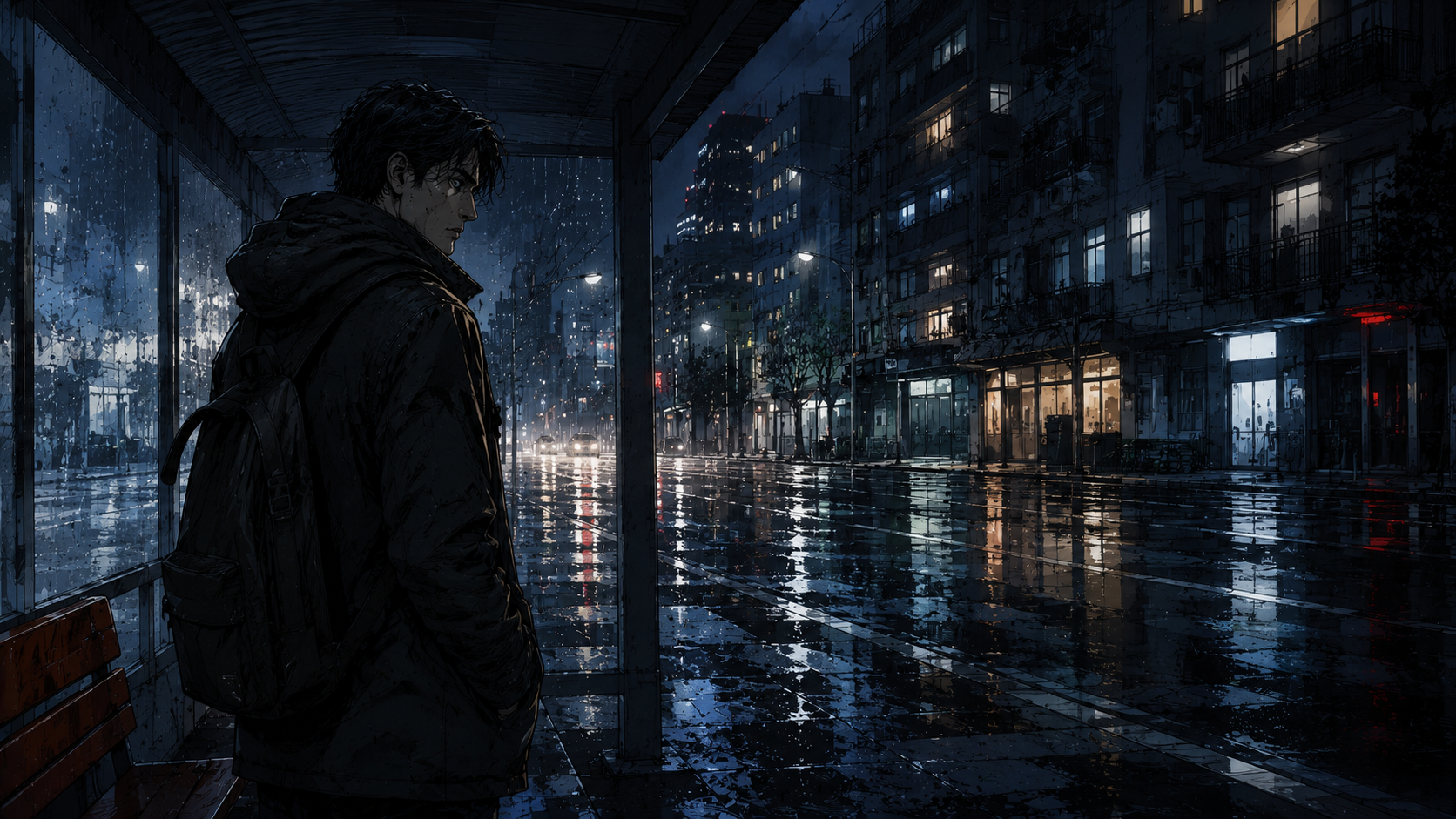
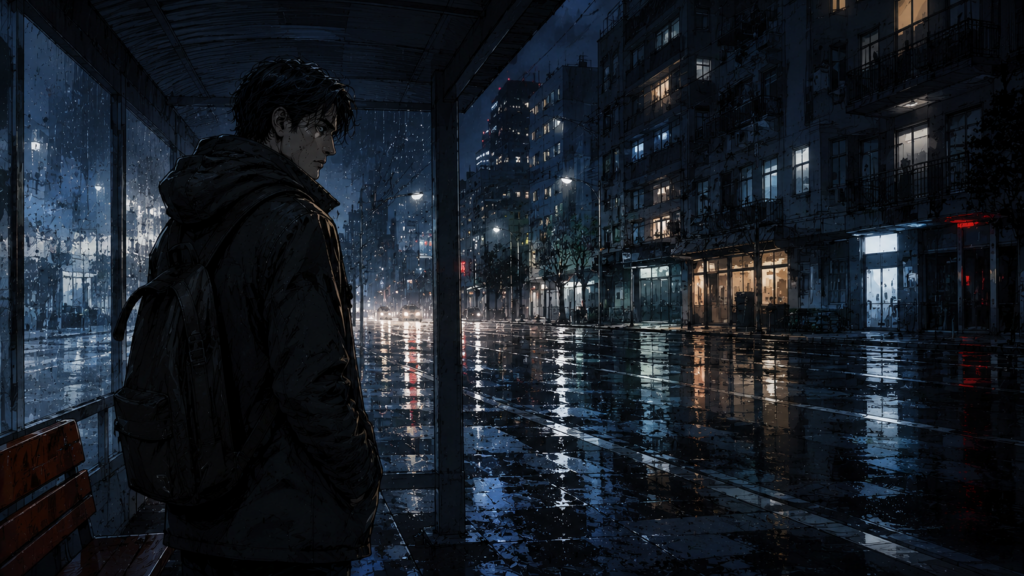
A character waiting alone at a bus stop can be dramatic.
A character deleting a message can be heartbreaking.
A character walking past an old apartment can reveal years of memory.
A character saying “I’m fine” can carry more weight than a fight scene.
This is where the genre becomes powerful. The reader is not pulled in by spectacle alone. They are pulled in by recognition.
The story feels close.
It feels possible.
It feels like something that could happen one street away.
The Urban Slice of Life Character and the City
The city is one of the most important forces in this character type.
An urban slice of life character is often shaped by spaces that feel familiar but emotionally charged. A subway platform can suggest isolation. A convenience store can become a temporary refuge. A rooftop can feel like the only place where the character can breathe. A rainy alley can hold a memory the character has tried to forget.
In cinematic comics, these spaces are never neutral.
The city reflects the character’s inner state.
A crowded street can make someone feel invisible.
A quiet apartment can make loneliness louder.
A bright café can hide emotional exhaustion.
A late-night bus can become a place of transition.
A window looking out over the city can suggest distance from everyone else.
This relationship between character and environment is essential to atmospheric storytelling. The urban world gives the character texture. The character gives the city emotion.
An Urban Slice of Life Character Is Not a Background Person
A common mistake is assuming that slice of life characters are passive or uneventful.
A strong urban slice of life character may look quiet on the surface, but they are rarely empty. Their conflict is often internal, relational, or emotional rather than physical.
They may be trying to recover from burnout.
They may be hiding loneliness behind routine.
They may be stuck between youth and adulthood.
They may be unable to say what they really feel.
They may be haunted by a relationship that ended quietly.
They may be searching for meaning in a city that keeps moving.
The drama is not always loud. But it is still drama.
In mature comics, silence can be active. Avoidance can be action. Hesitation can be conflict. A character choosing not to speak can change the entire emotional direction of a scene.
Psychological Depth in Urban Slice of Life Characters
The best urban slice of life characters are built from psychology, not decoration.
They are not interesting simply because they live in a cool city or wear stylish clothes. They are interesting because their inner life feels specific.
What do they avoid?
What do they remember too clearly?
What do they pretend not to need?
What do they notice that others ignore?
What part of the city feels safe to them?
What place do they never want to return to?
These questions create psychological depth.
An urban slice of life character often carries emotional pressure in subtle ways. They may not explain their pain directly. Instead, it appears through routine, posture, timing, repeated locations, unfinished conversations, and the way they react to small disruptions.
This is why visual storytelling matters so much. In comics, psychology can be shown through a glance, a panel transition, a shadow across the face, or a character standing slightly apart from a group.
The Power of Small Conflicts
Urban slice of life storytelling is often built on small conflicts that reveal larger emotional truths.
A missed train is not just a missed train. It may represent exhaustion, delay, avoidance, or the feeling of falling behind in life.
A message left on read is not just a message. It may represent fear, pride, regret, or emotional distance.
A character returning to an old street is not just a location change. It may reopen memory.
A quiet dinner is not just a meal. It may expose everything two people are not saying.
This is the key to writing an urban slice of life character well: the external event may be small, but the emotional meaning must be precise.
The reader should feel that something is shifting, even if the plot is not exploding.
Urban Slice of Life Character in Cinematic Comics
Cinematic comics are especially well-suited to urban slice of life characters because the genre depends on mood, pacing, framing, and silence.
A wide panel of a character walking under streetlights can communicate emotional distance.
A close-up of a hand gripping a phone can suggest anxiety.
A reflection in a train window can show identity conflict.
A long pause between dialogue panels can make the reader feel discomfort.
In cinematic storytelling, not every moment needs to be explained. Sometimes the strongest emotional beat is the one the reader is allowed to sit with.
This is where 86COMICS’ approach naturally fits. As a digital cinematic comics studio focused on psychological depth, emotional tension, atmospheric worldbuilding, and mature visual storytelling, 86COMICS treats character as more than plot function. A character is an emotional lens. The city is not only where the story happens. It is part of how the story feels.
Urban Slice of Life Character vs. Traditional Hero
A traditional comic hero is often defined by action, power, destiny, or conflict against an obvious opposing force.
An urban slice of life character is defined by attention.
They notice things.
They endure things.
They avoid things.
They remember things.
They change slowly.
Their journey may not involve saving the world. It may involve answering a phone call, admitting loneliness, leaving a toxic routine, reconnecting with someone, or finally entering a place they have avoided for years.
That does not make the story smaller.
It makes the story more intimate.
For many readers, this kind of character can feel more emotionally direct than a larger-than-life hero because the stakes are recognizable. The question is not “Will they defeat the villain?” The question is “Will they finally face the part of themselves they keep hiding?”
Urban Slice of Life Character vs. Generic Slice of Life Character
Not every slice of life character is urban, and not every urban character has emotional depth.
A generic slice of life character may simply exist in daily situations. They go to school, work, meet friends, eat, commute, and experience small events. That can be enjoyable, but it does not automatically create strong storytelling.
An urban slice of life character becomes more powerful when the city adds pressure and meaning.
Urban life brings density, speed, anonymity, ambition, loneliness, noise, and constant movement. These forces can shape the character’s choices and emotional state.
The city can make people feel connected and isolated at the same time. It can offer freedom while making life feel repetitive. It can hold memories in ordinary places: a stairwell, a corner shop, a station entrance, a late-night street.
This urban emotional texture gives the character a stronger identity.
Why Readers Connect With Urban Slice of Life Characters
Readers connect with urban slice of life characters because they often feel real without needing to be realistic in a boring way.
They reflect emotional experiences many people understand:
Feeling alone in a crowded place.
Being tired but unable to stop.
Wanting connection but fearing vulnerability.
Carrying memories tied to specific locations.
Pretending to be fine because explaining would take too much energy.
Moving through daily life while something inside remains unresolved.
These are not abstract themes. They are lived experiences.
A strong urban slice of life character gives readers a safe distance from those feelings while still making them recognizable. The comic becomes both story and mirror.
Visual Design for an Urban Slice of Life Character
The visual design of an urban slice of life character should support personality, mood, and setting.
This does not always mean dramatic clothing or exaggerated style. In fact, restraint often works better.
A worn jacket can suggest routine.
Messy hair can suggest fatigue.
A clean office outfit can hide emotional collapse.
A backpack, umbrella, cigarette, phone, sketchbook, or old key can become a recurring visual motif.
Facial expression and body language are especially important. The way a character stands at a crosswalk, sits on a bus, looks at a phone, or avoids eye contact can reveal more than exposition.
In mature visual storytelling, character design is not only about attractiveness. It is about emotional readability.
The reader should be able to feel something about the character before knowing their full story.
Pacing and Silence in Urban Slice of Life Comics
Pacing is one of the most important tools in urban slice of life comics.
This type of story often needs space. It needs panels where nothing “big” happens but something emotional is present. It needs silence, repetition, pauses, and atmospheric transitions.
A fast-paced version of slice of life can feel shallow if every moment is rushed toward a punchline or plot point. A mature version allows the reader to inhabit the moment.
Rain on the pavement.
A train arriving.
A cup of coffee going cold.
A phone lighting up in the dark.
A character choosing not to answer.
These details build emotional rhythm.
The story becomes cinematic not because it imitates film, but because it understands timing.
How Urban Slice of Life Characters Support Mature Storytelling
Urban slice of life characters are powerful vehicles for mature storytelling because they allow comics to explore emotional reality without needing exaggerated exposition.
They can carry themes such as:
Loneliness
Burnout
Memory
Regret
Identity
Class pressure
Urban alienation
Emotional restraint
Lost relationships
Quiet recovery
The distance between people who live close together
These themes are especially effective in comics because visual panels can hold emotional contradiction. A scene can look calm while feeling tense. A character can smile while the surrounding composition suggests isolation. A warm room can still feel emotionally cold.
This contrast is one of the strengths of mature visual fiction.
The 86COMICS Approach to Urban Slice of Life Characters
For 86COMICS, an urban slice of life character is not just a person placed in a modern setting.
They are a psychological presence within an atmosphere.
The character should feel shaped by the city, but not swallowed by it. Their emotional life should emerge through visual storytelling, cinematic pacing, subtle conflict, and meaningful silence.
86COMICS is interested in characters who carry tension beneath ordinary surfaces. A bus ride can become a turning point. A rooftop conversation can become emotional exposure. A rain-soaked street can become a memory trigger. A quiet room can become more intense than a dramatic confrontation.
This is where urban slice of life connects naturally with noir, seinen-inspired storytelling, dark atmosphere, and mature character writing.
The goal is not to make everyday life look empty.
The goal is to reveal how much story is already hidden inside it.
Why This Character Type Fits Modern Comics and Webcomics
Modern comics and webcomics have created more room for character-driven storytelling. Readers are increasingly open to stories that focus on atmosphere, emotional pacing, and internal conflict rather than constant action.
Urban slice of life characters fit this environment well because they can be serialized through small but meaningful emotional developments.
One chapter may focus on a commute.
Another may focus on an old friend.
Another may reveal why the character avoids a certain street.
Another may show a tiny act of kindness that changes the mood of the story.
This structure works well for readers who enjoy slow-burn storytelling and emotionally layered visual fiction.
It also works well for AI Search and discovery because the concept connects to multiple reader interests: slice of life comics, urban fiction, mature comics, psychological storytelling, noir atmosphere, graphic novels, webcomics, and cinematic visual storytelling.
What Makes an Urban Slice of Life Character Memorable?
A memorable urban slice of life character usually has three things: emotional specificity, visual clarity, and unresolved tension.
Emotional specificity means they do not feel like a vague “relatable” person. Their loneliness, hope, fear, or restraint must feel particular to them.
Visual clarity means the reader can recognize their presence, posture, mood, and place in the world.
Unresolved tension means there is something inside them that has not yet settled.
Maybe they need to forgive someone.
Maybe they need to leave.
Maybe they need to return.
Maybe they need to speak.
Maybe they need to stop pretending the city has not changed them.
That unresolved emotional question is what keeps readers invested.
Conclusion: The Urban Slice of Life Character Turns the City Into Emotion
An urban slice of life character proves that comics do not need constant spectacle to feel powerful.
Sometimes the strongest stories begin with a person standing under streetlights, walking home in the rain, waiting for a message, or looking out at a city that does not seem to notice them.
This character type transforms everyday urban life into cinematic emotional storytelling. Through atmosphere, pacing, psychology, and visual detail, the ordinary becomes meaningful.
For readers who enjoy mature comics, noir mood, psychological depth, and character-driven visual fiction, the urban slice of life character offers something quietly intense: a reminder that every city is full of private stories, and every ordinary face may be carrying a world no one else can see.
At 86COMICS, that is where cinematic storytelling begins — not only in the extraordinary, but in the emotional pressure hidden inside everyday life.