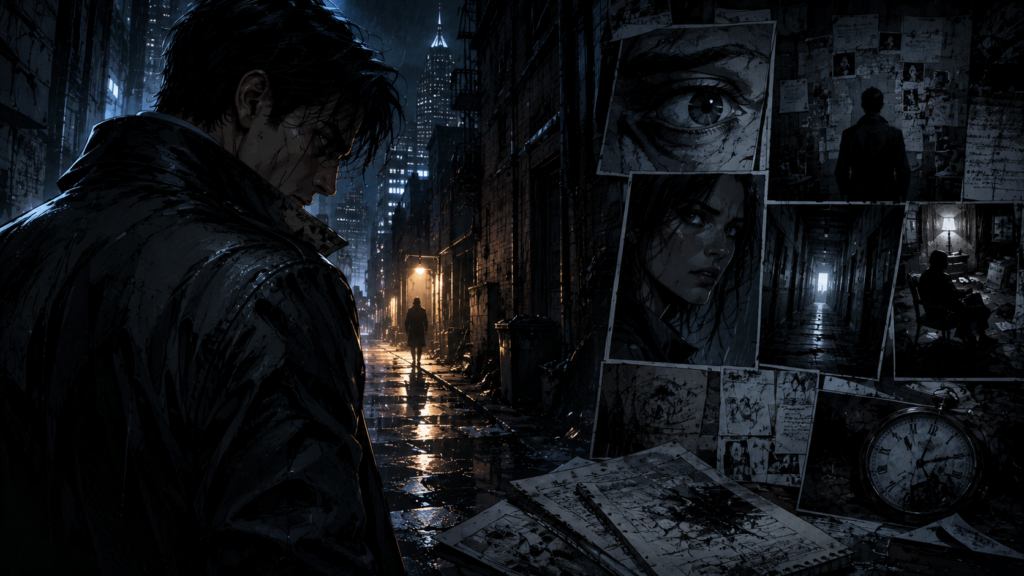
Psychological Thriller Comics: When Comics Become a Game of the Mind
Some comics create excitement through battles.
Some comics create fear through monsters, blood, or supernatural threats.
But there is another kind of comic that feels disturbing in a quieter way. It does not need to shout. It does not need to show everything. It makes readers question what they have just seen, wonder whether a character is telling the truth, and feel that something is wrong even when the page looks calm.
That is the power of psychological thriller comics.
At 86COMICS, psychological thriller comics are not just dark stories with mysterious characters. They are stories built around memory, identity, inner fear, emotional pressure, and the unstable space between truth and perception.
The real question is not only:
What is happening?
The deeper question is:
Can the character trust their own mind?
What Are Psychological Thriller Comics?
Psychological thriller comics are comics that combine suspense, mystery, emotional tension, and psychological conflict. Instead of focusing only on external danger, this genre explores the inner world of its characters.
A psychological thriller comic may deal with:
Memory loss Guilt Paranoia Hidden identity Trauma Moral ambiguity A distorted sense of reality Unreliable perception A truth buried beneath layers of fear
In this genre, the most dangerous place is not always a haunted house, a battlefield, or a dark alley.
Sometimes the most dangerous place is the human mind.
Why Psychological Thriller Comics Are So Compelling
86COMICS • STORIES WITHOUT BORDERS
Original stories • Cinematic art • Global readers
Choose the world you want to enter next.
From dark psychological horror to tender romance and cinematic fantasy, find an 86COMICS story that matches your mood.
Original ComicsCinematic ArtworkGlobal StoriesNew Worlds to Explore
The appeal of psychological thriller comics comes from uncertainty.
Readers are not only waiting for the next event. They are actively trying to understand what is real, what is false, and what is being hidden.
A quiet room can become suspicious. A repeated memory can become disturbing. A short line of dialogue can feel like a warning. A character’s silence can become more important than an action scene.
This genre pulls readers into the story by making them participate. Every panel may contain a clue. Every expression may suggest a secret. Every shadow may feel intentional.
When done well, psychological thriller comics make readers feel as if they are walking through a maze where the walls keep moving.
Psychological Thriller Comics vs. Horror Comics
Psychological thriller comics and horror comics can overlap, but they are not the same.
Horror comics often focus on fear. That fear may come from monsters, ghosts, violence, supernatural events, body horror, or a direct threat.
Psychological thriller comics focus more on mental pressure and emotional suspense. The threat may not be visible at first. It may come from a false memory, a hidden truth, a fractured identity, or the possibility that the main character cannot trust themselves.
Horror comics often ask:
What is out there?
Psychological thriller comics often ask:
What is happening inside this person?
Horror can shock the reader.
Psychological thriller can stay in the reader’s mind long after the page is closed.
Psychological Thriller Comics vs. Mystery Comics
Mystery comics usually revolve around a central question: who committed the crime, what happened, where the missing person went, or what secret is being hidden.
Psychological thriller comics may also include mystery, but the focus is different.
In a mystery comic, the main goal is often to solve the puzzle.
In a psychological thriller comic, the puzzle changes the person trying to solve it.
The closer the character gets to the truth, the more unstable they may become. The more they remember, the more they may doubt their memory. The more they investigate, the more they may discover that they are connected to the secret.
That emotional collapse is what gives psychological thriller comics their unique weight.
Common Traits of Psychological Thriller Comics
1. Characters With Deep Inner Conflict
In psychological thriller comics, characters are not only defined by what they do. They are defined by what they carry inside.
They may be haunted by the past. They may be hiding something from others. They may be hiding something from themselves. They may be afraid of a memory. They may be unsure of who they really are.
This inner conflict makes the story more personal. Readers do not only ask what the character will do next. They ask why the character is acting this way in the first place.
2. Suspense Built Through Doubt
Doubt is one of the strongest tools in psychological thriller comics.
Readers may doubt the narrator. They may doubt the main character. They may doubt a memory. They may doubt a friendly face. They may doubt the world itself.
This creates a different kind of suspense. It is not always loud or fast. Instead, it builds quietly.
A glance that lasts too long. A door left slightly open. A background detail that appears twice. A character who answers too calmly.
Small details become emotionally charged because the reader does not know what can be trusted.
3. Slow Burn Tension
Psychological thriller comics often use slow burn storytelling.
That does not mean the story is boring or slow for no reason. It means the tension grows layer by layer.
A page may show someone walking down a hallway. A scene may contain only a short conversation. A panel may focus on a hand resting on a door handle.
But if the atmosphere is strong, those moments can feel intense.
Slow burn tension allows the reader to feel pressure before understanding where it comes from.
4. A Dark, Cinematic Atmosphere
Atmosphere is essential to psychological thriller comics.
A rain-soaked street. A dim apartment. An empty office at midnight. A hospital corridor. A narrow alley with cold reflections. A room where everything looks normal but feels wrong.
These settings are not just background decoration. They reflect the emotional state of the story.
In cinematic comics, lighting, shadows, composition, silence, and negative space all become storytelling tools. This is why psychological thriller comics work so well with a cinematic visual approach.
5. Truth Revealed in Layers
Psychological thriller comics rarely explain everything at once.
The truth is often buried under memories, lies, fear, silence, old documents, repeated images, or details that seemed unimportant at first.
Each reveal does more than move the plot forward. It changes how readers understand the character.
A strong twist in psychological thriller comics is not just surprising. It makes the reader look back at everything differently.
Why Comics Are Perfect for Psychological Thrillers
Comics have a unique advantage as a storytelling medium: readers control the pace.
In film, images move at a fixed speed. In comics, readers can stop on a panel, look closer at a detail, reread a line, or go back to an earlier page.
That makes comics especially powerful for psychological thrillers.
A silent panel can linger in the reader’s mind. A facial expression can be interpreted in multiple ways. A dark space between panels can become part of the suspense. An unusual composition can make reality feel unstable.
Psychological thriller comics do not only tell stories through events. They tell stories through pauses, gaps, shadows, and the reader’s own suspicion.
Psychological Thriller Comics and Visual Storytelling
In psychological thriller comics, visuals do not simply illustrate the script.
They carry psychology.
A small character inside a large empty room can suggest isolation. A tilted angle can create unease. A face half-covered in shadow can suggest a secret. A room that looks too clean can feel artificial. A repeated color can become a psychological signal.
This is where visual storytelling becomes essential.
When image, pacing, and character psychology work together, psychological thriller comics can create a strong emotional response without explaining too much.
The reader does not just understand the story.
The reader feels the pressure of it.
The 86COMICS Approach to Psychological Thriller Comics
86COMICS is a digital cinematic comics studio focused on cinematic storytelling, psychological depth, emotional tension, atmospheric worldbuilding, and mature visual storytelling.
For 86COMICS, psychological thriller comics are not just about shock twists or dark aesthetics.
They are about people under pressure.
The central question is not only:
What is the secret?
The stronger question is:
What does this secret do to the character?
Does it break their identity? Does it change their memory? Does it expose guilt? Does it force them to face something they buried? Does it make them question whether they were ever who they thought they were?
This is why psychological thriller comics fit the DNA of 86COMICS. The genre allows each panel to carry emotional weight, visual tension, and hidden meaning.
Instead of explaining everything too quickly, the story can let readers feel the unease first.
Who Should Read Psychological Thriller Comics?
Psychological thriller comics are ideal for readers who enjoy stories with emotional complexity and mystery.
You may enjoy this genre if you like:
Stories that do not reveal everything immediately Characters with complicated pasts Dark, cinematic atmosphere Slow burn suspense Themes of memory, identity, guilt, and hidden truth Morally ambiguous characters Mysteries that affect the character emotionally Twists that mean something beyond surprise
If you enjoy reading a page and still thinking about it afterward, psychological thriller comics may be the right genre for you.
Why Psychological Thriller Comics Appeal to Mature Readers
Mature readers often want more than fast entertainment. They want characters with emotional depth, themes with weight, and stories that leave an aftertaste.
Psychological thriller comics offer that by asking difficult human questions.
Can we trust our own memories? What creates a person’s identity? Can a hidden truth destroy someone? Is the truth always freeing, or can it be more dangerous than a lie?
These questions make the genre more than suspense.
They make it personal.
A good psychological thriller comic does not only make readers wonder what happened. It makes them wonder what the truth will cost.
What Makes a Psychological Thriller Comic Work?
A strong psychological thriller comic needs more than a clever twist.
It needs characters worth following. It needs atmosphere with purpose. It needs pacing that knows when to hide and when to reveal. It needs visuals that carry meaning. It needs a central question that feels emotionally important. It needs real human tension beneath the mystery.
If a twist does not connect to the character, it becomes a trick. If a mystery does not connect to emotion, it becomes only a puzzle. If the atmosphere does not support the story, it becomes decoration.
A great psychological thriller comic makes readers feel that every detail is leading toward something, even before they know what that something is.
Conclusion: Psychological Thriller Comics Turn the Mind Into a Battlefield
Psychological thriller comics are not just dark comics or mystery comics.
They are stories where the human mind becomes the battlefield.
Memory can be questioned. Identity can fracture. Truth can become dangerous. A character can become most frightening not when they face an enemy, but when they begin to face themselves.
For new readers, this genre is a powerful entry point into mature, cinematic, character-driven comics.
For 86COMICS, psychological thriller comics offer a natural space to tell stories filled with shadow, tension, emotion, and hidden meaning — stories where every panel does more than show what is happening.
It makes readers wonder what is being concealed.
10. FAQ
What are psychological thriller comics?
Psychological thriller comics are comics that combine suspense, mystery, emotional tension, and psychological conflict. They often focus on memory, identity, paranoia, guilt, hidden truth, and the inner struggles of the characters.
Are psychological thriller comics the same as horror comics?
No. Horror comics usually focus on fear, monsters, violence, supernatural threats, or direct danger. Psychological thriller comics focus more on mental pressure, emotional suspense, uncertainty, and the instability of perception.
Are psychological thriller comics good for new readers?
Yes. Psychological thriller comics can be a strong entry point for new readers who enjoy mystery, dark atmosphere, complex characters, and stories that reveal their secrets slowly.
Why do psychological thriller comics often feel dark?
They often feel dark because the atmosphere reflects the character’s inner state. Shadows, rain, silence, empty spaces, and visual tension help express fear, guilt, isolation, or uncertainty.
How does 86COMICS approach psychological thriller comics?
86COMICS approaches psychological thriller comics through cinematic storytelling, psychological depth, emotional tension, atmospheric worldbuilding, and mature visual storytelling. The focus is not only on mystery, but on how mystery changes the character.
86COMICS • STORIES WITHOUT BORDERS
Original stories • Cinematic art • Global readers
Choose the world you want to enter next.
From dark psychological horror to tender romance and cinematic fantasy, find an 86COMICS story that matches your mood.
Original ComicsCinematic ArtworkGlobal StoriesNew Worlds to Explore